
Exploring the realm of Business Travel Tax Deductions Every Entrepreneur Should Know, this guide aims to shed light on the crucial deductions that can benefit entrepreneurs. From understanding the basics to uncovering commonly overlooked deductions, this topic delves into the intricate world of tax deductions for business travel.
Delving deeper into the nuances of qualifying for these deductions and maximizing their benefits, this guide serves as a valuable resource for entrepreneurs looking to optimize their tax savings.
Introduction to Business Travel Tax Deductions
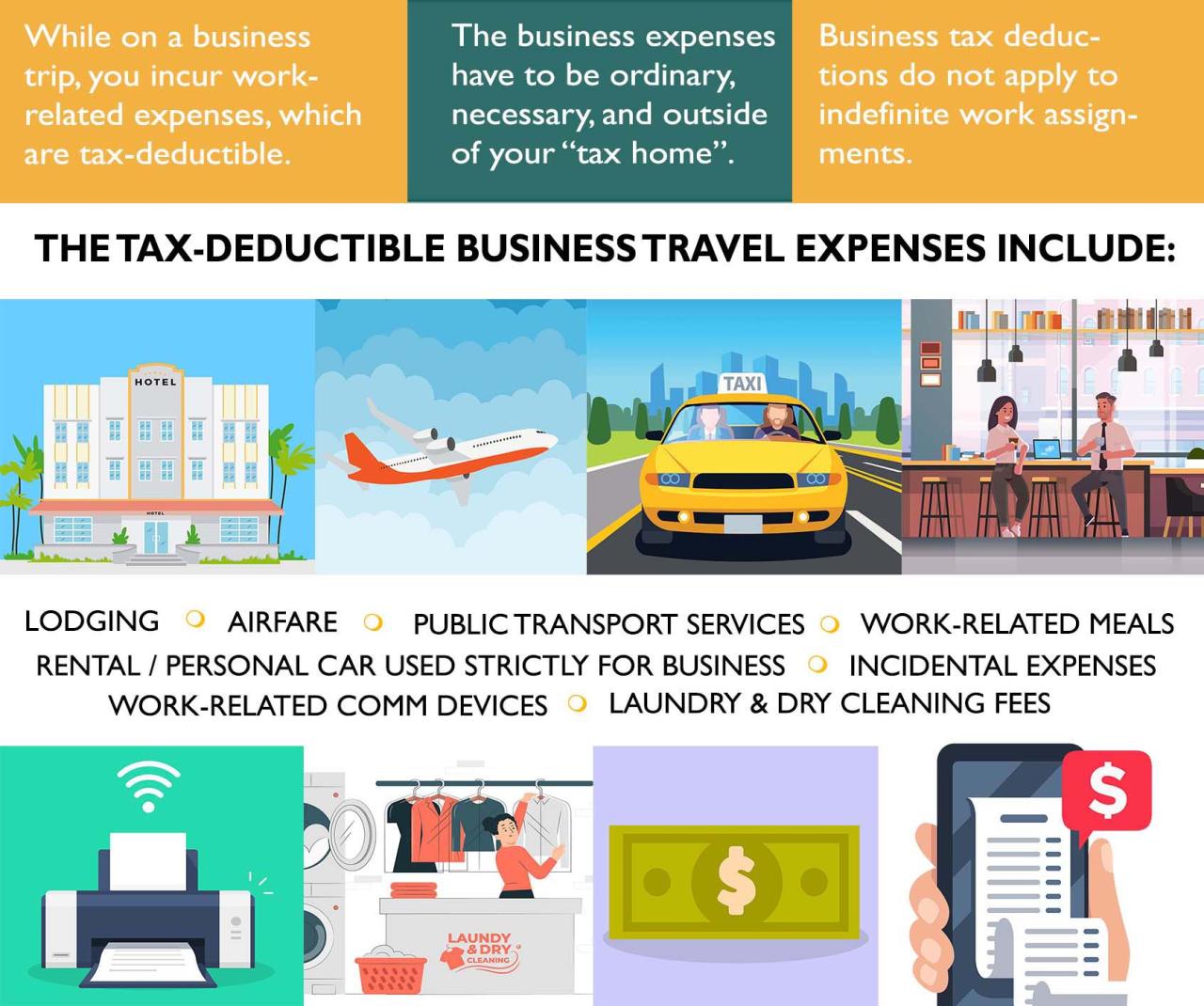
Business travel tax deductions refer to the expenses that a business owner can write off when traveling for work-related purposes. These deductions can help reduce the overall tax liability for entrepreneurs and small business owners. It is essential to understand these deductions to maximize savings and ensure compliance with tax laws.Examples of Expenses That Can Be Deducted
- Transportation costs such as airfare, train tickets, or rental cars
- Lodging expenses for overnight stays during business trips
- Meals and entertainment costs incurred while on business travel
- Conference or seminar registration fees
The Importance of Knowing These Deductions for Entrepreneurs
- Maximizing tax savings: By taking advantage of business travel tax deductions, entrepreneurs can reduce their taxable income and lower their overall tax bill.
- Compliance with tax laws: Understanding which expenses qualify for deductions can help entrepreneurs stay compliant with tax regulations and avoid potential audits.
- Financial planning: Knowing the potential deductions for business travel can help entrepreneurs budget effectively and plan for future expenses.
Qualifying for Business Travel Tax Deductions
 When it comes to claiming tax deductions for business travel, certain criteria must be met to ensure eligibility. Understanding the distinction between business and personal travel expenses is crucial, as well as maintaining proper documentation for tax purposes.
Criteria for Qualifying Business Trip Expenses
- The primary purpose of the trip must be business-related, such as attending a conference, meeting clients, or conducting research.
- The trip must be away from your tax home, which is typically defined as the city or area where your primary place of business is located.
- Expenses must be considered ordinary and necessary for your trade or business, such as transportation, lodging, meals, and other related costs.
Difference Between Business and Personal Travel Expenses
- Business travel expenses are directly related to your business activities and are deductible, while personal travel expenses, such as sightseeing or leisure activities, are not.
- It's important to keep thorough records and receipts to differentiate between the two types of expenses, as mixing them can lead to potential tax issues.
Tips for Documenting Expenses
- Keep detailed records of all expenses incurred during the business trip, including receipts, invoices, and travel itineraries.
- Use a dedicated business credit card or separate bank account for all business-related expenses to streamline the documentation process.
- Maintain a mileage log for any driving expenses, noting the date, starting point, destination, and purpose of the trip.
- Consider using digital tools or apps to track and categorize expenses efficiently, making it easier to prepare for tax filing.
Commonly Overlooked Business Travel Tax Deductions
When it comes to business travel tax deductions, there are some commonly overlooked opportunities that can help entrepreneurs save money. By taking advantage of these deductions, small businesses can reduce their tax liability and keep more of their hard-earned profits.
Vehicle Expenses
One of the frequently missed deductions is vehicle expenses related to business travel. Entrepreneurs can deduct the costs of operating and maintaining a vehicle used for business purposes, including gas, oil changes, repairs, and insurance. Keeping detailed records of mileage and expenses is crucial to claim this deduction accurately.
Meals and Entertainment
While most business owners are aware of the deduction for meals during business travel, they often overlook the expenses related to entertainment. Entrepreneurs can deduct a portion of entertainment expenses incurred while on a business trip, such as tickets to events or shows that are directly related to business activities
Home Office Deduction
Entrepreneurs who have a home office and use it as their primary place of business can claim a home office deduction for business travel expenses. This deduction can include costs associated with the home office, such as utilities, internet, and rent or mortgage interest.
Maximizing Business Travel Tax Deductions
When it comes to maximizing business travel tax deductions, there are several strategies that entrepreneurs can implement to optimize their tax benefits. Planning trips effectively and combining business and leisure travel can significantly impact the amount of deductions you can claim.Effective Trip Planning
- Keep detailed records of all business-related expenses during your travels, including transportation, accommodation, meals, and other related costs.
- Utilize technology such as expense tracking apps to easily capture and categorize expenses for tax purposes.
- Plan your trips strategically to ensure that the majority of your time is spent on business-related activities to qualify for deductions.
- Consider scheduling meetings, conferences, or networking events during your travels to maximize the business purpose of your trip.
Combining Business and Leisure Travel
- When combining business and leisure travel, make sure to clearly separate and document your business-related expenses from personal expenses.
- Ensure that the primary purpose of your trip is for business, with any leisure activities being secondary in nature.
- Take advantage of weekends or downtime to explore the destination, but be mindful of the time spent on personal activities versus business activities.
- Consult with a tax professional to understand the specific rules and regulations governing combined business and leisure travel deductions.
Record-Keeping for Business Travel Tax Deductions
Maintaining accurate records for business travel expenses is crucial for tax purposes. It ensures that you have proper documentation to support your deductions and can help you avoid any issues during an audit. Here are some tips on how to organize your receipts, invoices, and other relevant documents for business travel tax deductions:Organizing Receipts and Invoices
- Keep all receipts and invoices related to your business travel expenses in one designated folder or digital folder.
- Separate receipts by categories such as transportation, accommodation, meals, and other expenses to make it easier to calculate and claim deductions.
- Make sure all receipts are legible and include essential details like the date, amount, and purpose of the expense.
Using Digital Tools for Record-Keeping
- Consider using accounting software or apps specifically designed for tracking business expenses to streamline the process.
- Scan and digitize your paper receipts to avoid losing them and create a backup in case the physical copies fade over time.
- Set reminders to input expenses regularly into your chosen digital tool to ensure accuracy and completeness of your records.
Closing Summary
In conclusion, Business Travel Tax Deductions Every Entrepreneur Should Know play a vital role in minimizing tax liabilities and maximizing savings for businesses. By staying informed and leveraging these deductions effectively, entrepreneurs can navigate the complexities of tax laws with confidence and financial prudence.
FAQ Section
What expenses can be deducted for business travel tax purposes?
Expenses such as transportation, accommodation, meals, and other necessary costs directly related to business activities during travel can typically be deducted.
How can entrepreneurs differentiate between personal and business travel expenses for tax deductions?
Personal travel expenses are those not incurred for business purposes, while business travel expenses are directly tied to conducting business activities. It's crucial to keep these expenses separate for accurate deductions.
Are there specific tools or software that can assist in record-keeping for business travel tax deductions?
Yes, there are various digital tools and software available that can help entrepreneurs organize and maintain accurate records of their business travel expenses, such as expense tracking apps and accounting software.